100 Fun Questions to Ask Kids That Spark Real Conversation
You ask, "How was your day?"
Your kid says, "Fine."
And that's the whole conversation.
If that sounds familiar, you're not doing anything wrong. Most kids just don't respond well to big, vague questions. "How was your day?" asks them to summarize hours of experiences on the spot. That's a lot.
Specific questions work better because they give kids something concrete to grab onto. Instead of trying to explain their whole day, they can tell you about one funny moment, one hard part, one surprise, or one thing that made them proud.
That matters for more than conversation. Research on parent-child reminiscing suggests that when adults help children talk through real experiences in specific, open-ended ways, it can support memory, language, and emotional understanding over time.
So if you want better connection and fewer one-word answers, start with better prompts.
Below are 100 fun questions to ask kids — organized by age, setting, and mood — so you can find the right question for any moment.
Why Specific Questions Help Kids Open Up
Kids are usually much better at remembering moments than summarizing an entire day.
That's why these kinds of questions tend to work:
- Specific instead of broad — "What made you laugh today?"
- Open-ended instead of yes/no — "What happened next?"
- Light enough to feel safe — especially if your child is tired, shy, or distracted
You don't need to turn every dinner into a deep talk. The goal is simple: make it easier for your child to say something real.
How to Use These Questions
A few quick tips before the list:
- Don't rapid-fire them like an interview.
- Pick one question and stay with it for a minute.
- Ask follow-ups when your child gives you something interesting.
- Answer the question yourself too. Kids open up more when it feels mutual.
- Use the setting to your advantage: dinner, bedtime, walks, and car rides all work well.
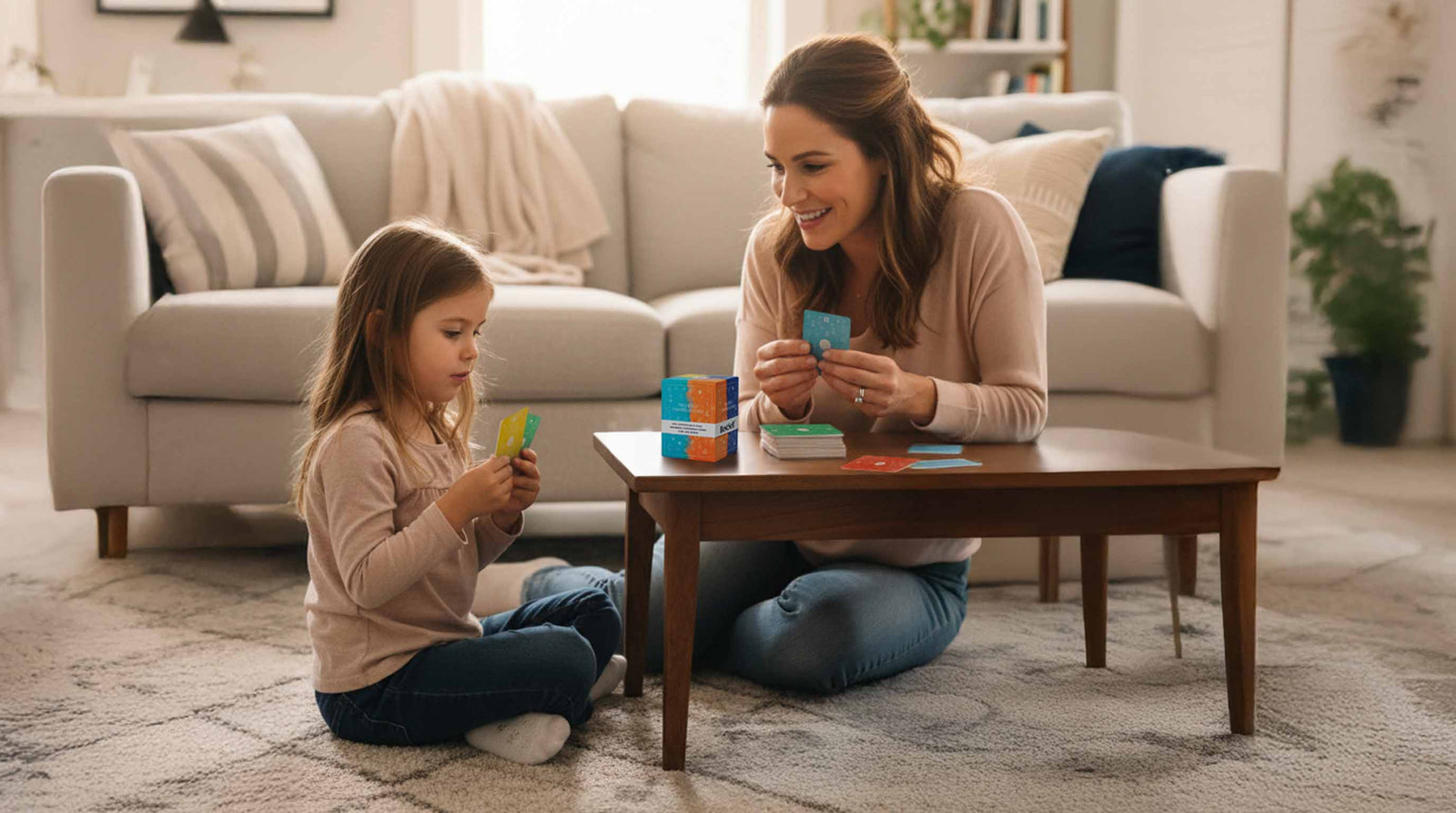
If you want a hands-free version of this, the Little Talk Deck is 170 of these kinds of prompts on physical cards — great for car rides and screen-free time.
Fun Questions to Ask Kids by Age Group
Not all questions land the same way at every age. A question that makes a 5-year-old giggle might get an eye-roll from a 12-year-old. These are organized so you can grab something that fits.
Fun Questions for Little Kids (Ages 3–6)
Toddlers and preschoolers love silly, concrete, and imaginative questions. Keep it playful — the weirder the better.
- What would happen if it rained spaghetti?
- If you had a magic wand, what's the first thing you'd do?
- What does a dinosaur say when it's happy?
- If your teddy bear could talk, what would it say right now?
- Would you rather eat a bug or lick the floor?
- What's the silliest word you can make up?
- If you were a dog, what would you bark at?
- What do clouds taste like?
- If you could be a cartoon character for a day, who would you be?
- What would you put in a giant sandwich?
Tip: With this age group, don't expect a long answer. Even a one-word response with a big smile counts. The goal is just getting used to talking together.
Fun Questions for Kids (Ages 7–10)
Grade-school kids have more vocabulary and social awareness but still love imaginative play. These bridge silly and slightly thoughtful.
- If you could have any superpower, what would it be and why?
- What was the funniest moment from today?
- If animals could talk, which one would be the rudest?
- Would you rather have fingers as long as your legs or legs as long as your fingers?
- If you could make one rule everyone in the world had to follow, what would it be?
- If you could rename yourself, what name would you pick?
- What do dogs dream about?
- If your stuffed animals could talk, what would they say?
- Would you rather be able to fly or breathe underwater?
- If you had to wear one Halloween costume every day for a year, what would it be?
Try this: Answer one yourself first. It lowers the pressure and usually makes the second answer better.
Fun Questions for Tweens (Ages 11–13)
Tweens are more independent and often pull back from conversation. Questions that give them a chance to share opinions without feeling put on the spot tend to work best.
- If you could swap lives with any person for a week, who would it be?
- What would you do if you were president for one day?
- If you could only listen to one album forever, what would it be?
- What's a skill most adults don't have that you actually do?
- If you could add one class to school that doesn't exist, what would it be?
- What would the perfect Saturday look like?
- If you could go back in time and observe any historical event, what would you choose?
- What's something you're better at than most people realize?
- If you had $1,000 to spend on anything (but yourself), what would you do with it?
- What rule do you think is completely pointless?
Fun Questions to Ask Kids on Road Trips
Car rides are perfect for conversation — no eye contact, mild distraction, and nowhere to go. These road trip questions for kids work whether you're driving five minutes or five hours.
- If our car could fly, where would you want to go first?
- What's the best road trip snack that doesn't exist yet?
- Would you rather have a talking car or a self-driving car?
- If you could pick the soundtrack for this whole trip, what genre would it be?
- What's the craziest thing you'd do if you won a million dollars on the way there?
- If you could stop at any made-up attraction, what would it be?
- What's the most random fact you know?
- If we hit a traffic jam, what's the best way to pass time?
- Would you rather drive through a desert or a forest for 10 hours?
- If you could teleport us anywhere in the world right now, where would we end up?
These also pair well with the Little Talk Deck — toss the card deck in the glove compartment and you've got conversation starters for the whole trip.
Fun Questions to Ask Kids at Dinner
Dinner questions for kids work best when they're low-stakes and specific. The goal is one good conversation, not a structured debrief.
- What made you laugh today?
- Did anything surprise you today?
- Who did you sit with at lunch, and what did you talk about?
- What was the hardest part of your day?
- Did anyone do anything kind for you today?
- What was the best moment before lunch?
- Was there a moment today when you felt proud of yourself?
- Did you help anyone today? What happened?
- What's one new thing you learned today?
- If you could change one thing about today, what would it be?
These work because they ask for one moment, not a full report. Add "why?" after any answer and you'll double the length of the conversation automatically.
Fun Bedtime Questions for Kids
Bedtime is one of the most underrated conversation windows. Kids are tired enough to drop their guard but awake enough to reflect. Keep these calm and open-ended.
- What's one thing that happened today you want to remember?
- Did anything make you feel a little worried today?
- What are you looking forward to tomorrow?
- What made you feel happy today?
- Is there anything you wish had gone differently?
- What's one thing you're grateful for right now?
- Did you feel brave about anything today?
- Who was kind to you today?
- What's one thing you want to dream about tonight?
- If today was a movie, what would the title be?
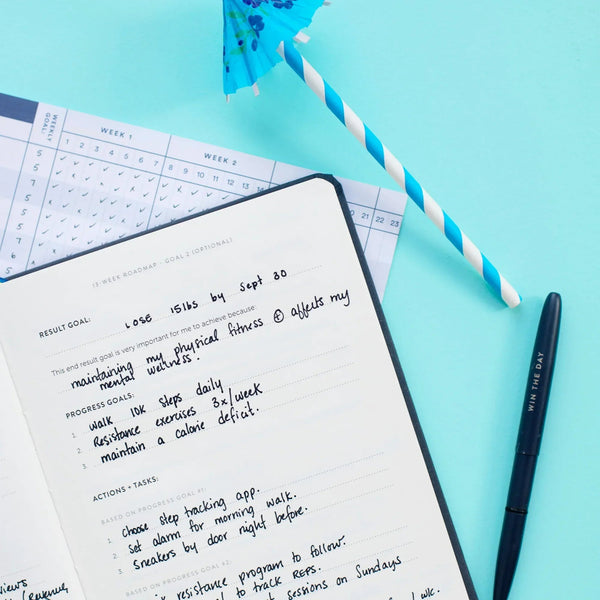
If your child likes journaling, the Little Hero's Journal has daily prompts built in — it turns these bedtime questions into a 5-minute ritual kids actually look forward to.
Questions Your Kids Can Answer About You
This category is fun, slightly dangerous, and often the most revealing. Kids love being the observer for once.
- What do I do at work all day?
- What's your favorite activity we do together?
- If you were the parent for a day, what rules would you change?
- What do you think I was like when I was your age?
- What's something you wish I knew about you?
- Do you think I'm strict, easygoing, or somewhere in between?
- What's your favorite meal I make?
- If you could give me a new name, what would it be?
- What do you think makes me happy?
- What's one thing I do that embarrasses you? Be honest.
If your child gives you a brutally honest answer, don't get defensive. That's usually the moment trust grows.
Deep Questions to Ask Your Kids
Use these when you have more time and your child feels relaxed. Bedtime, long walks, and car rides are usually better than rushed transitions.
- What are you proud of but haven't told me about yet?
- If you could change one thing about the world, what would it be?
- What makes someone a good friend?
- Is there anything you're scared of that you haven't told me yet?
- If you could have dinner with anyone in the world, who would it be?
- What's a mistake that taught you something important?
- When do you feel most like yourself?
- What's a skill you want to get better at?
- If you could give your younger self one piece of advice, what would it be?
- What does being brave mean to you?
Not every child will answer these right away. That's fine. Sometimes the win is simply making it normal to ask.
Would You Rather Questions for Kids
Would you rather questions for kids are easy, playful, and great for filling small pockets of time without handing over a screen.
- Would you rather be able to fly or be invisible?
- Would you rather have a pet dragon or a pet unicorn?
- Would you rather live in a treehouse or on a houseboat?
- Would you rather be the fastest person alive or the strongest?
- Would you rather eat pizza for every meal or never eat pizza again?
- Would you rather be able to talk to animals or speak every human language?
- Would you rather have a rewind button or a pause button for your life?
- Would you rather be a famous singer or a famous athlete?
- Would you rather have no homework ever or no chores ever?
- Would you rather be great at sports or great at art?
Add "why?" after their answer. That's where the real conversation starts.
Gratitude and Reflection Questions
These questions help kids notice what felt good, what mattered, and who showed up for them.
- What are three good moments from today?
- Who are you thankful for, and why?
- What made you smile this week?
- What's a kind thing someone did for you recently?
- What's one part of your life you really love right now?
- Is there something you're looking forward to this week?
- What's something that used to be hard that's gotten easier?
- Who in your life do you think deserves a thank you right now?
- What's a memory from the past month that made you happy?
- What's one thing about yourself that you like?
Tips for Better Conversations With Kids
Having a strong list helps, but how you ask matters too.
1. Don't ask the second they walk in the door
Most kids need a beat after school. Save the question for the car, dinner, a walk, or bedtime.
2. Ask follow-up questions
The first answer is usually just the doorway.
Good follow-ups include:
- Tell me more about that.
- What happened next?
- How did that feel?
- Why do you think that mattered?
3. Share your own answer
If you want openness, model it.
4. Put your phone away
Kids notice when you're only half-listening.
5. Don't force it
Some nights they'll talk. Some nights they won't. Consistency matters more than intensity.
6. Let their answers land
You don't need to turn every answer into a lesson.
Make Conversations a Daily Habit
The best conversations with kids happen when connection is built into the routine — not as a one-off event.
Two tools that make this easier:
- The Little Hero's Journal — a daily journal designed for kids ages 5–12. Each page has simple prompts that help kids reflect on their day, set small goals, and build gratitude as a habit. Takes about 5 minutes. Works great as a bedtime ritual.
- The Little Talk Deck — 170 conversation starter cards for kids. Shuffle, pick one, and go. No setup, no screens, no effort. Great for the car, dinner table, or any moment you want a real conversation instead of silence.
These questions work. But if you want a stack of them ready to go — without scrolling through a blog post at dinner — the Little Talk Deck gives you 170 kid-tested prompts on cards you can shuffle, deal, and let your kids pick from.
For the whole family (including teens and adults): the Family Talk Deck has 50 prompts that go from silly to surprisingly deep.
Shop Little Hero's Journal → · Shop the Little Talk Deck → · Shop the Family Talk Deck →
Frequently Asked Questions
What are fun questions to ask kids?
Fun questions to ask kids are specific, easy to picture, and don't require a long answer. The best ones give kids something concrete to respond to — a moment, a choice, a hypothetical — rather than asking them to summarize a whole day. Questions like "What made you laugh today?" or "Would you rather have a pet dragon or a pet unicorn?" work because they're easy to answer without pressure.
What are good questions to ask your kids?
Good questions to ask your kids are specific, open-ended, and easy to picture. Instead of asking for a full recap of the day, ask about one moment: what made them laugh, what felt hard, who they spent time with, or what surprised them. That usually leads to better answers.
How do I get my child to open up?
Lower the pressure. Ask during relaxed moments like dinner, bedtime, or car rides. Use one question instead of five. Share your own answer too. And if they don't say much the first time, don't force it. Kids open up faster when they feel safe, not cornered.
What are fun conversation starters for kids?
Fun conversation starters for kids include silly hypotheticals, imagination prompts, and would-you-rather questions. Try: "If animals could talk, which one would be the rudest?" or "Would you rather have a pet dragon or a pet unicorn?"
What questions should I ask kids about school?
Good questions to ask kids about school focus on moments, not summaries. Ask things like:
- Who did you sit with at lunch?
- What made you laugh today?
- What was the hardest part of your day?
- Did anything surprise you?
- Was there a moment you felt proud of yourself?
What are good bedtime questions for kids?
Bedtime questions for kids work best when they're calm and reflective. Try: "What's one thing that happened today you want to remember?" or "What are you looking forward to tomorrow?" These ease kids into sleep while giving them space to process the day.
How often should I use these questions?
You don't need to turn it into a big ritual unless that helps. One meaningful question a day is enough to build the habit. The key is consistency, not volume.
Tools to Take These Conversations Further
A great question is just the start. If you want to make meaningful conversations a real habit with your kids, these two tools are worth keeping on the table:
Little Hero's Journal — A daily journaling practice built specifically for kids ages 6–12. It guides them through a 5-minute reflection on their day: what went well, what was hard, what they're grateful for. Over time, it builds the habit of checking in with themselves — so the conversations you start at dinner have somewhere to land. Parents often notice their kids come to dinner already thinking about what they want to share.
Icebreaker Deck — 150 conversation cards for kids and adults alike. Great for family game nights, road trips, or any moment when you want a ready-made spark without having to think of questions yourself. Unlike most card games, these are designed to get everyone talking — not just taking turns.
Want deeper conversations?
The Icebreaker Deck includes 150 questions that work for every age — pull a card at dinner and watch what happens. No prep, no pressure, just real conversation.
Keep Exploring
Looking for more ways to connect with your family? These articles are worth reading next:
- 75 Screen-Free Activities for Kids (That They'll Actually Love) — fun alternatives to screens that naturally lead to more conversation time.
- Family Talk: Holiday Family Memories with Conversation Starters — seasonal questions that turn meals into lasting memories.
Start Tonight
Tonight, skip "How was your day?"
Try this instead:
If animals could talk, which one would be the rudest?
Or:
What made you laugh today?
That's it. Start there. And if you want to make it a habit, the Little Hero's Journal gives kids a daily ritual for reflection that takes about five minutes — and builds something that lasts.