
How I Lost 30 Minutes Doing Absolutely Nothing
You might notice I'm arriving in your inboxes a bit later than usual this week. This week's been hectic, wife back to work, toddler back to daycare after the long holiday weekend, the usual chaos.
Which brings me to something funny I've been thinking about lately. I've been writing about productivity for 10+ years. And for over half of that time, I was giving advice to people who had kids... while not having kids myself.
Honestly, the absolute audacity. It's like those single, childless guys on the internet posting their 4am routines and cold plunge protocols. Yeah, of course you're productive and getting a million things done, you have no living breathing distractions 😅
Anyway, now that I'm humbled by parenthood, let me tell you about how I lost 30 minutes this week standing in my kitchen doing absolutely nothing useful.
The Scroll Trap
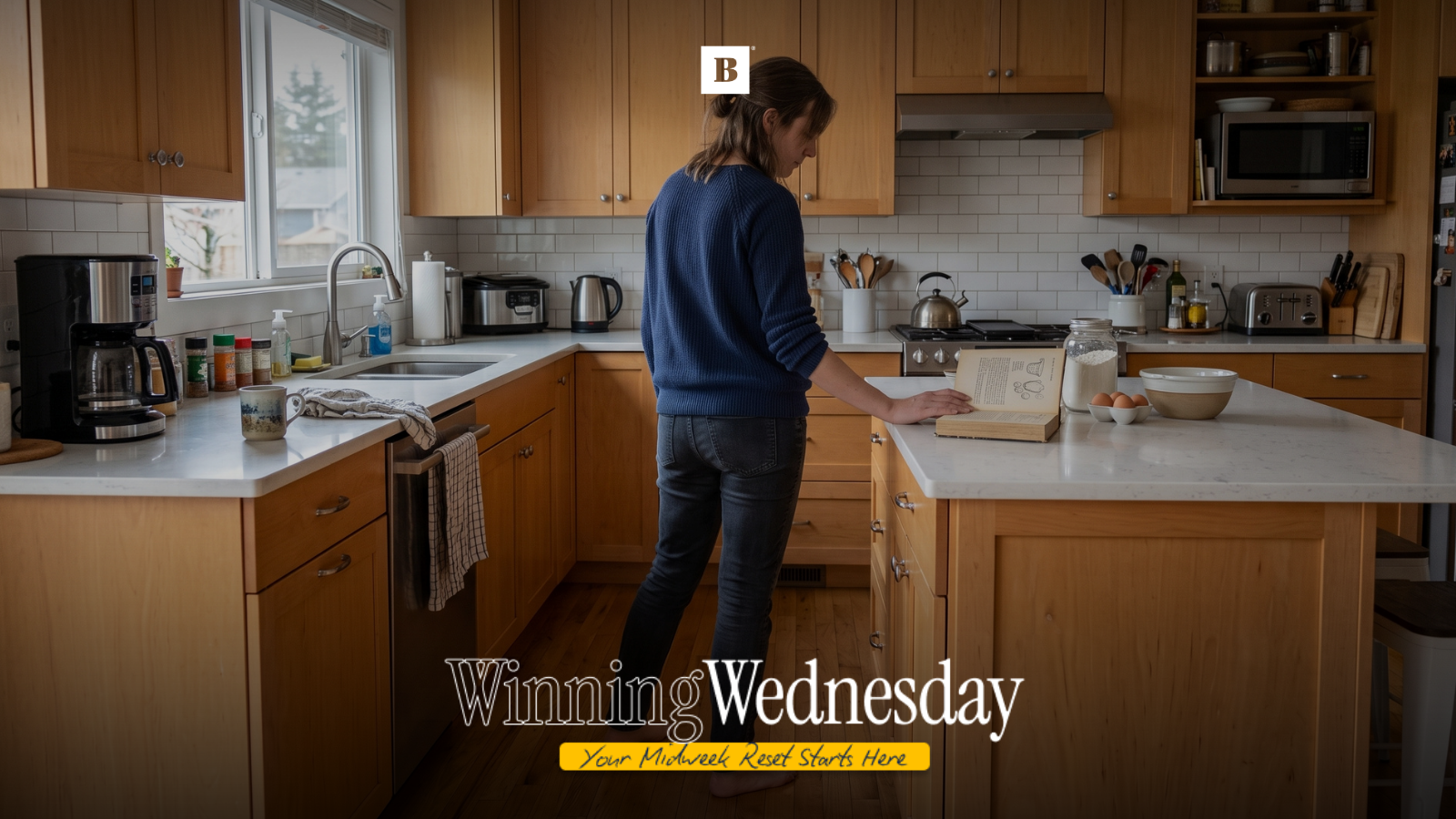
Earlier this week, I dropped Quinn at daycare and came home to my first quiet Monday after the long weekend. I was excited to get back into the flow. I made coffee, good coffee, the kind I actually looked forward to drinking, and while it brewed, I made the mistake of opening Instagram.
Just a quick scroll while I waited. One article led to another tab. That one linked to something else. Another tab. Then another.
Suddenly I'm standing in my kitchen, moving from tab to tab like I'm doing something productive. But I'm not. I'm just... consuming.
Then my phone screen went dark. "Helm scheduled session started."
It was 9:30am. I'd been scrolling for thirty minutes. The entire admin block I'd scheduled? Gone. And I had nothing to show for it except half-remembered articles I wouldn't think about tomorrow.
The only reason I stopped? My own app forced me to. Sometimes I hate it, no joke.
Here's the thing: I wasn't being lazy. My brain was doing exactly what it's designed to do.
Your ADHD brain seeks the fastest source of dopamine available. And your phone? It's a slot machine. Every scroll is a pull of the lever. Sometimes you get nothing. Sometimes you get a like, a comment, a perfectly looped video that hits just right. Your brain doesn't know what's coming, so it keeps pulling.
The blank document? Delayed dopamine. Uncertain dopamine. Your phone? Instant. Guaranteed. Comfortable.
Your brain isn't broken. The phone is just designed better.
This is why willpower doesn't work. Willpower assumes you'll notice the moment before you pick up your phone. But with ADHD, there is no moment before. The thought "I should check Instagram" and the act of opening Instagram are the same thing.
Research shows that if you can create even a 30-second pause between impulse and action, your rational brain has time to catch up. That pause is where choice lives. The problem? Most interrupts live on your phone. You can set reminders asking "What am I avoiding right now?" but you'll swipe them away without thinking. It's like asking your slot machine to remind you not to gamble.
What If the Interrupt Was Physical?
This is where Helm changes the game.
Here's how it works:
1. You set a focus session. Instagram is locked. TikTok is locked. Your brain wants the dopamine, but the apps won't open.
2. The impulse hits. "I just want to check it for a second."
3. Here's the difference: To unlock the app, you have to physically get up, walk to your Helm device, and scan it.
That 30-second walk is the gap. By the time you reach it, you realize: "Wait. I don't actually need this. I was just avoiding the discomfort of writing." And now you have a choice.
The difference between Helm and other app blockers? Most blockers operate on punishment: "You can't have this." So you white-knuckle through, feel deprived, and binge the second it ends.
Helm operates on friction and reward:
- Physical friction creates the pause
- Health Unlocks create the reward
- App limits create the boundary
Your brain isn't fighting itself. It's working with a system designed for how it actually operates.
Your phone becomes a reward for taking care of yourself, not a replacement for it.

Set 3 random reminders on your phone tomorrow.
Each one asks: "What am I avoiding right now?"
Notice what comes up. Notice how often you're on autopilot.

Where in your life does autopilot take over? What would change if you noticed it?

🎬 Why Your Brain Is Hijacked — Short-form, high-dopamine inputs hijack the brain the same way drugs do: fast reward, followed by deeper craving and emotional numbness. The fix isn't willpower. It's rebuilding friction and retraining the brain to find meaning in effort again. Pairs perfectly with what we talked about today.