Morning Routine Checklist (Printable & Proven)
How you start your morning shapes everything that follows. A chaotic, reactive start leads to a chaotic, reactive day. An intentional start creates momentum that carries you forward.
This isn't about waking at 4am or following some guru's exact routine. It's about building a morning that works for your life, your schedule, and your goals.
The checklist below is customizable. Take what fits. Leave what doesn't. The best morning routine is one you'll actually do.
Printable Morning Routine Checklist (Quick Version)
Save this, print it, or copy it into your planner. Customize the blank fields to match your schedule.
Physical Start
- [ ] Drink a full glass of water
- [ ] Move your body (_____ minutes)
- [ ] Shower and get ready
- [ ] Eat or prepare nourishment
Mental Foundation
- [ ] Avoid phone for first _____ minutes
- [ ] Meditate or breathe (_____ minutes)
- [ ] Journal and reflect
- [ ] Review your goals
Day Preparation
- [ ] Check calendar and appointments
- [ ] Identify top 3 priorities
- [ ] Prepare your workspace
- [ ] Set your intention for the day
Start with what you'll actually do. Expand from there.
Why Morning Routines Matter
Your morning sets the trajectory for your day. Here's why:
Willpower is highest in the morning. Decision-making depletes mental energy. By evening, you're running on fumes. Morning is when you have the cognitive resources for what matters most.
You're not yet reactive. Before checking email or social media, your attention belongs to you. Once you start responding to external demands, you're in reactive mode.
Small actions compound. A good morning doesn't guarantee a good day, but it tilts the odds. Over months and years, those odds add up significantly.
Consistency creates identity. When you show up for yourself every morning, you build evidence that you're someone who follows through. That identity extends beyond morning.
Morning Routine List: Core Habits That Work
Regardless of time available, these four elements form the core of any effective morning routine list.
Hydration. Your body dehydrates overnight. Water first, coffee second. A full glass of water before anything else starts your physiology right.
Movement. Any form counts. Stretching, walking, yoga, a full workout. Moving your body shifts your state and signals to your brain that the day has begun.
Mental preparation. Whether that's meditation, journaling, goal review, or quiet reflection — some time for your mind before it's bombarded with external input.
Nourishment. Eating something that supports your energy rather than spiking and crashing it. Or, if you practice intermittent fasting, intentionally choosing to delay eating.
These adapt to any schedule. A 15-minute routine and a 90-minute routine both include these elements, scaled appropriately.
Morning Routine Checklist: The Full Component List
Use this as the master list. Pick the elements that fit your life and schedule.
Physical Wellness
- [ ] Drink a full glass of water
- [ ] Move your body (5–60 minutes depending on schedule)
- [ ] Eat a nourishing breakfast (or make an intentional fasting choice)
- [ ] Complete personal hygiene and getting ready
Mental Clarity
- [ ] Avoid phone for first 30–60 minutes
- [ ] Practice meditation or breathwork (even five minutes)
- [ ] Journal or reflect on intentions
- [ ] Review your goals and priorities
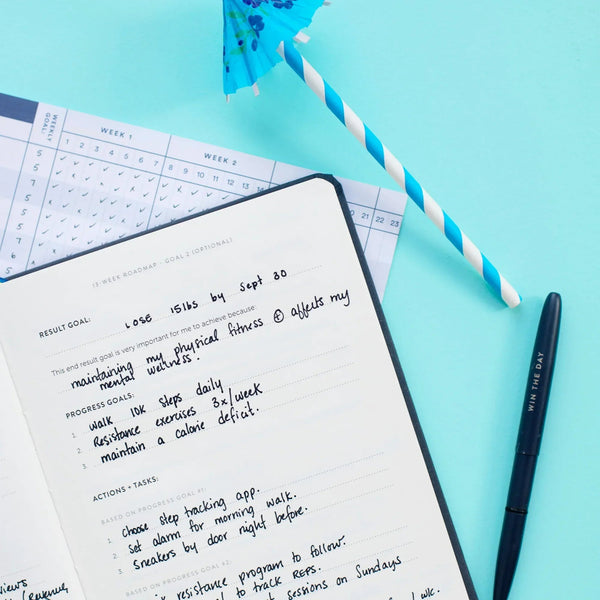
The Self Journal structures morning reflection into a five-minute practice: gratitude, daily targets, and focus for the day.
Daily Preparation
- [ ] Review your schedule and appointments
- [ ] Identify your top three priorities for the day
- [ ] Prepare materials and resources you'll need
- [ ] Quick tidy of your workspace
Morning Routine Ideas for Every Schedule
Not everyone has two hours. These morning routine ideas scale the same principles to different time constraints.
The 15-Minute Power Start
For people with tight schedules. Every minute counts.
Timeline:
- 0:00–0:02: Glass of water
- 0:02–0:07: Light stretching or movement
- 0:07–0:12: Quick journaling (three priorities, one gratitude)
- 0:12–0:15: Review calendar, prepare for first task
Key principle: Do less, but do it. A shortened routine you complete beats an elaborate one you abandon.
The 30-Minute Balanced Routine
The sweet spot for most people. Meaningful without being unsustainable.
Timeline:
- 0:00–0:02: Water and stretch
- 0:02–0:12: Light exercise (walk, yoga, bodyweight movements)
- 0:12–0:20: Shower and ready
- 0:20–0:25: Journal (Self Journal morning routine)
- 0:25–0:30: Review day, set intentions
Key principle: Balance physical and mental preparation. Neither dominates.
The 60-Minute Deep Routine
For people with schedule flexibility who want significant morning investment.
Timeline:
- 0:00–0:05: Hydrate and light stretching
- 0:05–0:35: Full workout or extended yoga
- 0:35–0:45: Shower and ready
- 0:45–0:50: Meditation or breathwork
- 0:50–0:55: Journaling and goal review
- 0:55–1:00: Plan day, identify priorities
Key principle: Extended movement and mental practice create a strong foundation.
The 90-Minute Ideal Routine
Aspirational but doable for those who prioritize morning.
Timeline:
- 0:00–0:05: Hydrate, light stretching, wake up naturally
- 0:05–0:50: Substantial workout
- 0:50–1:05: Shower and ready
- 1:05–1:15: Meditation (10 minutes)
- 1:15–1:25: Journaling and reflection
- 1:25–1:35: Reading or learning
- 1:35–1:45: Plan day thoroughly
- 1:45–1:50: Nourishing breakfast
Key principle: This is the "full practice." Most people can't do this daily, but it's worth doing when possible.
The Best Morning Routine: How to Build Yours Step by Step
No template fits your life exactly. Here's how to create the best morning routine for your specific situation.
Step 1: Audit Your Current Morning
For one week, track what you do each morning. Not what you want to do — what you actually do. Wake time, activities, order, duration. Notice patterns without judgment.
Step 2: Identify What Drains vs. Energizes
Which activities leave you feeling better? Which leave you feeling worse? For most people, checking social media drains energy. Movement and reflection build it. Your audit reveals your specific patterns.
Step 3: Start With ONE New Habit
The biggest mistake: trying to overhaul everything at once. Pick one habit. One. Do it consistently for two weeks before adding another. Sustainable change is gradual.
Step 4: Stack Habits
Attach new habits to existing behaviors. "After I pour my coffee, I'll write three things I'm grateful for." "After I brush my teeth, I'll stretch for two minutes." Existing habits provide cues for new ones.
Step 5: Review and Adjust Weekly
Each week, ask: What's working? What's not? What will I do differently? Routines evolve. What works in summer may not work in winter. What works when single may not work with kids. Stay flexible.
Track your morning wins in the Self Journal. Over time, you'll see patterns in your most productive days.
Morning Routine Mistakes to Avoid
Checking your phone first thing. Email, news, social media — all of it puts you in reactive mode. Someone else's agenda hijacks your attention before you've set your own intentions. Your phone can wait 30 minutes.
No buffer time. If you wake up with minutes to spare before leaving, you're always behind. Wake early enough that you're not rushed. Rushing creates stress that colors the entire day.
Too ambitious too fast. Going from no routine to a two-hour routine doesn't work. You'll do it for three days, then abandon it. Start small. Build gradually. Sustainable beats impressive.
Copying someone else exactly. What works for a CEO without kids differs from what works for a parent of three. Use others' routines for inspiration, not prescription.
Skipping weekends. Consistency matters. If your routine disappears on weekends, you're rebuilding every Monday. A modified weekend version maintains momentum without rigid structure.
Perfectionism. Missing one morning doesn't mean you've failed. Life happens. Get back to it tomorrow. The goal is general consistency, not perfect compliance.
Your Evening Sets Up Your Morning
The best morning routines start the night before.
Prepare clothes and materials. Decision fatigue begins with "what should I wear?" Remove that decision the night before.
Set intentions. Spend two minutes before bed reviewing tomorrow. What's most important? What will you focus on? Going to bed with clarity creates morning momentum.
Establish a screen curfew. Blue light from devices suppresses melatonin and degrades sleep quality. Stop screens 30–60 minutes before sleep.
Get enough sleep. No morning routine compensates for inadequate rest. If you need to wake earlier, go to bed earlier. Sacrificing sleep for routine defeats the purpose.
Prepare your space. A tidy environment in the morning requires tidying the night before. A few minutes of evening cleanup creates a calm morning.
The Tool That Makes Your Morning Routine Actually Stick
Most morning routines fail not because the habits are wrong — but because there's no system to track them, adjust them, and hold you accountable to them.
The BestSelf Self Journal was designed specifically for this. It structures your morning into a five-minute practice:
- Set your top 3 priorities for the day
- Write what you're grateful for
- Identify your single most important focus
Over 13 weeks, you build a documented record of your best days — the habits, the routines, the conditions that produce your highest performance. When you can see the pattern, you can repeat it.
Pair this checklist with the Self Journal and your morning routine stops being something you try to remember and starts being something you do. See the Self Journal →
Start Tomorrow
You don't need the perfect routine. You need a routine you'll actually do.
Pick one element from this guide. Water first thing. A two-minute stretch. Five minutes of journaling. One thing.
Do that one thing tomorrow morning. And the morning after. Once it's automatic (usually two to three weeks), add another element.
Mornings compound. Small improvements accumulate into transformed days. Transformed days become transformed weeks, months, years.
Your morning is the one part of the day that belongs to you, before the world's demands take over. Use it wisely.
Anchor your morning with intention. Start with the Self Journal.
Frequently Asked Questions
What time should I wake up for a morning routine?
Early enough to complete your routine without rushing, but not so early that you're sleep-deprived. Most people need 15–60 minutes before their regular wake time. Adjust bedtime accordingly.
How do I become a morning person if I'm naturally a night owl?
Shift gradually. Move wake time earlier by 15 minutes per week. Prioritize sleep hygiene. Expose yourself to light upon waking. It takes weeks to adjust, but chronotypes are more malleable than people assume.
What if I have kids and my morning isn't mine?
Wake before them. Even 15–20 minutes of quiet time before kids wake creates a different start. Alternatively, involve older kids in elements of your routine (stretching together, gratitude sharing).
Should I exercise in the morning or later?
Morning exercise ensures it happens regardless of how the day unfolds. But the best time to exercise is when you'll consistently do it. If evenings work better for your schedule and energy, exercise then.
Is it bad to check my phone in the morning?
Checking your phone immediately puts you in reactive mode, responding to others' priorities instead of setting your own. Most people benefit from waiting 30–60 minutes. Your messages can wait.
How long does it take to establish a morning routine?
Habit research suggests 21–66 days depending on complexity. Start with one simple element — it becomes automatic faster than a complex multi-step routine. Add elements gradually for sustainable change.
What should be on a morning routine checklist?
At minimum: hydration, movement, mental preparation (journaling or reflection), and day planning. The exact activities depend on your schedule and goals. The checklist at the top of this article is a strong starting point.
What is the best morning routine for productivity?
One that protects your attention before it's demanded elsewhere. That means no phone for the first 30 minutes, clear priorities before you start work, and some form of physical and mental activation. The specific activities matter less than doing them consistently.