Tasks, goals, deadlines: keeping all of it straight can turn into its own full-time job. That's the gap the Weekly Action Pad is built to close, whether you're a professional juggling clients, a student juggling deadlines, or just someone who wants their week to feel less like a scramble. Here's how to actually get the most out of it.
1. Create your master to-do list
Start by writing down everything, on paper, in a bullet journal, in a Google doc, wherever works for you. Your master list isn't just work tasks. Doctor's appointments, meal prep, errands, time with your kids, anything that's going to eat into your week belongs on it.
This does two things. First, it clears your head. It's wild how much mental energy goes into just trying to remember stuff, energy you'd rather spend actually doing the stuff. Second, writing it all down means you're planning your whole life, not just your job, which tends to be where work-life balance actually starts improving.
2. Identify the tasks you'll complete this week
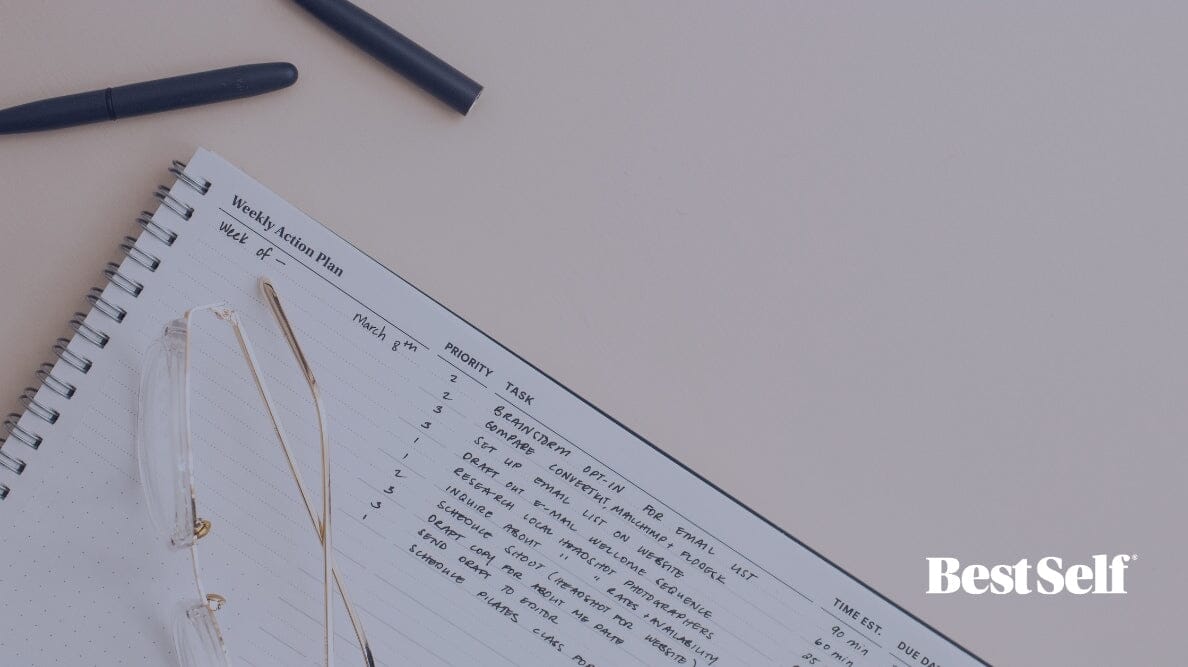
Go through your master list and pull out everything you want to knock out in the next seven days. Write those onto your Weekly Action Pad.
One thing that helps: organize by project. Something like:
- A collection for each client
- A collection for one-off projects
- A collection for home
Instead of one long, tangled list, you end up with a clear picture of what each area of your life actually needs from you this week.
3. Mark up your due dates
Not every task deserves equal attention. Roughly 20% of your effort tends to produce 80% of your results, and the way you find that 20% is by looking at what's actually due when.
Put your deadlines on the page and you'll know exactly when each task needs to happen. It sounds small, but it's the difference between planning your week on purpose and scrambling through it at the last minute because something snuck up on you.
4. Prioritize your tasks
Use the priority column to sort what actually matters. A simple system that works:
- Top priority. Has to happen, no excuses.
- Important. Matters, but there's some room to move it.
- Delegate. Needs doing, doesn't need to be you.
- Dump. Doesn't move anything forward. Cross it off.
Working through a list top to bottom, or chasing whatever looks easiest just to feel productive, tends to leave the tasks that actually matter untouched. Sort by priority instead and you can end the day feeling like you accomplished something, even on the days you only got through a handful of things.
5. Estimate timeframes
Ever built a to-do list that looked great on paper and fell apart by lunch? Same. Usually that happens because the list was built to feel impressive, not to actually be doable.
Write down roughly how many minutes each task will take. You'll be wildly off at first, that's fine, it's a skill that gets sharper with practice. Once you've got rough estimates, planning your actual day (step seven) gets a lot more realistic, and you stop overbooking yourself.
6. Use the E/N/D formula
Some tasks energize you. Some drain you. Some barely register either way. Naming which is which changes how you schedule your day.
- E, energize. Tasks that give you a boost.
- N, neutral. Tasks that don't move the needle emotionally.
- D, drain. Tasks that cost you energy.
If writing energizes you, save it for the post-lunch slump. If calling your accountant drains you, do it when your energy's highest. It's a small categorization that ends up mattering more than it sounds like it should.
7. Plan your day
This is where everything comes together. With due dates, priorities, time estimates, and energy levels all mapped out, picking your next task stops being a guessing game.
- Priorities keep momentum moving
- Due dates keep things from slipping through the cracks
- Time estimates keep you from wasting minutes
- The E/N/D formula puts your energy where it actually counts
Don't skip celebrating what you get done, big or small. Recognizing progress is what keeps the momentum going into next week.
The Weekly Action Pad isn't just a to-do list. It's a system for actually getting through your week instead of just surviving it.
Plan your week
Turn a scattered to-do list into a plan
The Weekly Action Pad gives you the structure to prioritize, estimate, and actually follow through.
Shop the Weekly Action Pad