He’s not thinking about twenty years from now. He’s thinking about tonight, dinner, homework, the work email he hasn’t answered, whether there’s enough in the tank for one more bedtime story before he’s done.
That’s how it works. Fatherhood lives almost entirely in the present tense. In the immediate, the daily, the constant small decisions about what to prioritize and what to let go.
But what he does tonight is becoming something much larger than tonight. And there’s research to prove it.
The finding that changes everything
The Institute for Research on Poverty at the University of Wisconsin-Madison reviewed decades of data on father involvement and its outcomes. The findings on children’s development were significant — cognitive, emotional, social outcomes all measurably better for kids with involved fathers. But one finding stands apart from all the others.
Children of involved fathers are more likely to become involved parents themselves.
Not always. Not automatically. But the pattern is meaningful: the father who is present, attentive, and engaged, who treats his role as something worth doing intentionally rather than something that just happens around him, may be building a template his children carry into their own parenting decades from now.
He doesn’t know he’s doing it. He’s just trying to get through Tuesday.
But Tuesday is the whole thing.
What “involved” actually means
It’s worth being specific about what the research counts as involvement, because it’s not what most people assume.
It’s not primarily about time. A father who spends twelve hours a day in the same house but is distracted, disengaged, or emotionally absent doesn’t produce the same outcomes as one who is genuinely present for two. The data is consistent on this: quality of attention matters more than quantity of hours.
And quality of attention, in practice, looks like fairly specific things. Asking questions and listening to the full answer. Putting the phone down and staying in the moment. Having conversations that go somewhere beyond logistics and instructions. Being curious about who his kids are becoming, not just managing what they do.
It also looks like something less obvious: taking care of himself. Pursuing his own goals alongside his family ones. Modeling what it looks like to be a person who keeps growing, keeps showing up, keeps doing the work on himself even when nobody’s watching.
That last part is the template. Not the perfection — the persistence.
What the kids are actually learning
Children learn from what their parents say. But they learn even more from what their parents repeatedly do.
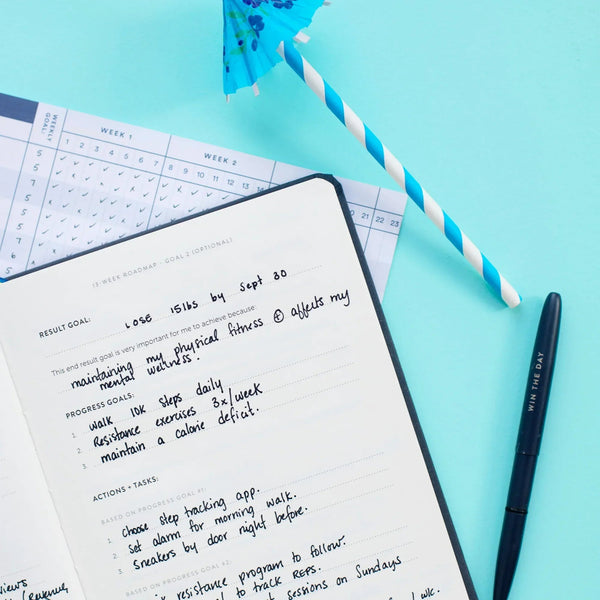
When a father sits down with a journal in the morning before the house wakes up, he’s not just planning his day. He’s showing his kids that adults take their inner life seriously — that thinking carefully about who you want to be and how you want to live is a thing worth doing.
When he puts his phone face down during dinner and actually asks a question and waits for the answer, he’s not just being present at a meal. He’s modeling that the people in front of you are worth more than whatever’s on the screen.
When he has a real conversation with his partner — about something that matters, not just logistics — his kids are watching that too. Learning what it looks like when two people actually talk to each other.
None of this is performative. None of it requires announcing itself. It’s just a father being himself — intentionally, consistently, on ordinary days — and his kids absorbing it so deeply it becomes part of how they understand what a parent does.
Twenty years from now
His daughter is thirty-four. She has a two-year-old who won’t stop asking why. She’s exhausted and overwhelmed and trying to figure out how to be present when there’s so much pulling her elsewhere.
And she reaches for something she learned so long ago she doesn’t even remember learning it. She puts her phone down. She asks a question. She waits for the real answer.
She got that from him. From the Tuesday nights he didn’t think anyone was paying attention.
This is the gift that doesn’t show up in any thank-you card. The one that takes twenty years to be fully received. The one he’s already giving, right now, without knowing it.
What to give the father who’s already doing this
The best Father’s Day gift for a father like this isn’t something that tells him what to do. It’s something that makes it easier to keep doing what he’s already doing.
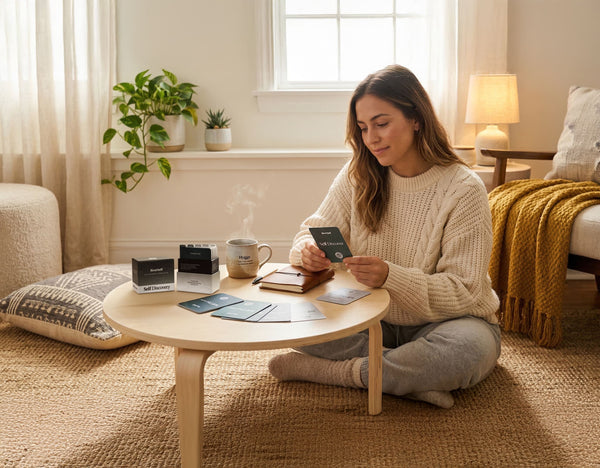
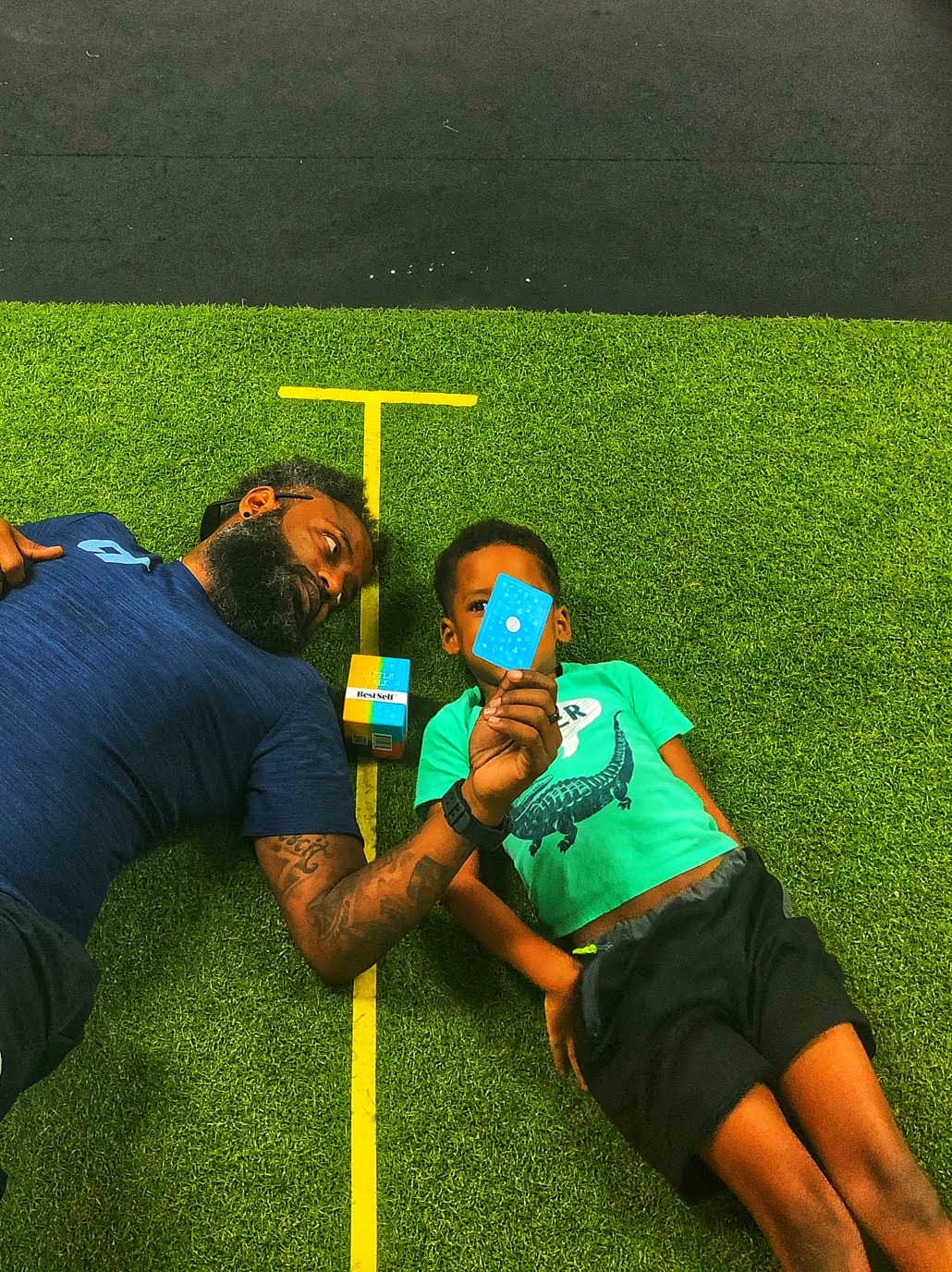
A journal that gives him fifteen minutes a day to stay connected to his own goals alongside everyone else’s. A card deck that makes the conversations with his kids easier to start on an ordinary night. A focus device that removes the one thing most consistently pulling his attention away from the people in front of him.
Not a reward. A tool. For a father who understands that the work is ongoing and worth doing well.
The Self Journal is for the dad who’s still working on himself. The Little Talk Deck is for the dad who wants better conversations with his kids tonight. The Helm is for the dad who wants an easier way to create phone-free time.
He’s setting the model right now. In the small decisions, the ordinary evenings, the consistent daily choice to show up as a person — not just a provider, not just a role, but a person who’s still becoming something.
That’s the thing his kids will carry forward. That’s the thing worth celebrating this Father’s Day.
Shop the Father’s Day collection →
Gifts for the father who understands that how he shows up now becomes the model his kids carry forward.
Sources for Blog Post 5
-
Institute for Research on Poverty, University of Wisconsin-Madison. “Involved fathers play an important role in children’s lives.” Read the research →
-
Kotila, L. E., & Kamp Dush, C. M. (2013). “Involvement with Children and Low-Income Fathers’ Psychological Well-Being.” Fathering. Read the study →