Picture this: you walk in, ask how school was, and get one word back. "Fine." Ask what happened and it's "nothing." This happens most years, but the first couple of weeks feel different, because somewhere in that classroom, the friend groups are still being decided.
Every August the same question gets asked at pickup lines and dinner tables across the country, and it gets the same one-word answer back. Parents know this happens. Kids know this happens. The question keeps getting asked anyway, mostly because there isn't an obvious replacement for it sitting around.
Kids usually aren't dodging you on purpose. The question just doesn't give them anywhere to go. "How was school" can be answered honestly in one word, which is exactly the problem.
Here's a specific reason to ask differently: a 2022 study in Frontiers in Psychology found that where a kid sits in class predicts who they end up becoming friends with, more than personality or shared interests do. Proximity does more of the work than most of us would guess, which makes a question like who do you sit next to now a lot more useful than how was school.
That finding is worth sitting with for a second. It means the friendships forming in your kid's classroom right now are shaped less by who they naturally click with and more by something as ordinary as a seating chart. A kid three rows away might be exactly the kind of friend they'd get along with, and they may never find that out just because they never end up nearby. Asking about seating isn't small talk. It's one of the few questions that actually maps onto how kid friendships get made in the first few weeks.
One question a day, for your kid, all week
| Day | Question |
|---|---|
| Monday | 💛 Who are the important people in your life right now, and what makes them special? |
| Tuesday | 🪑 Who do you sit next to these days? |
| Wednesday | 🦁 When did you feel brave today? |
| Thursday | 🤝 What's something kind you did for someone this week? |
| Friday | 😄 What made you laugh today? |
Five questions gets you through one week, which is really just a starting point. If it turns into something you both look forward to, there's plenty more where these came from, enough to make it through a whole school year without asking the same thing twice.
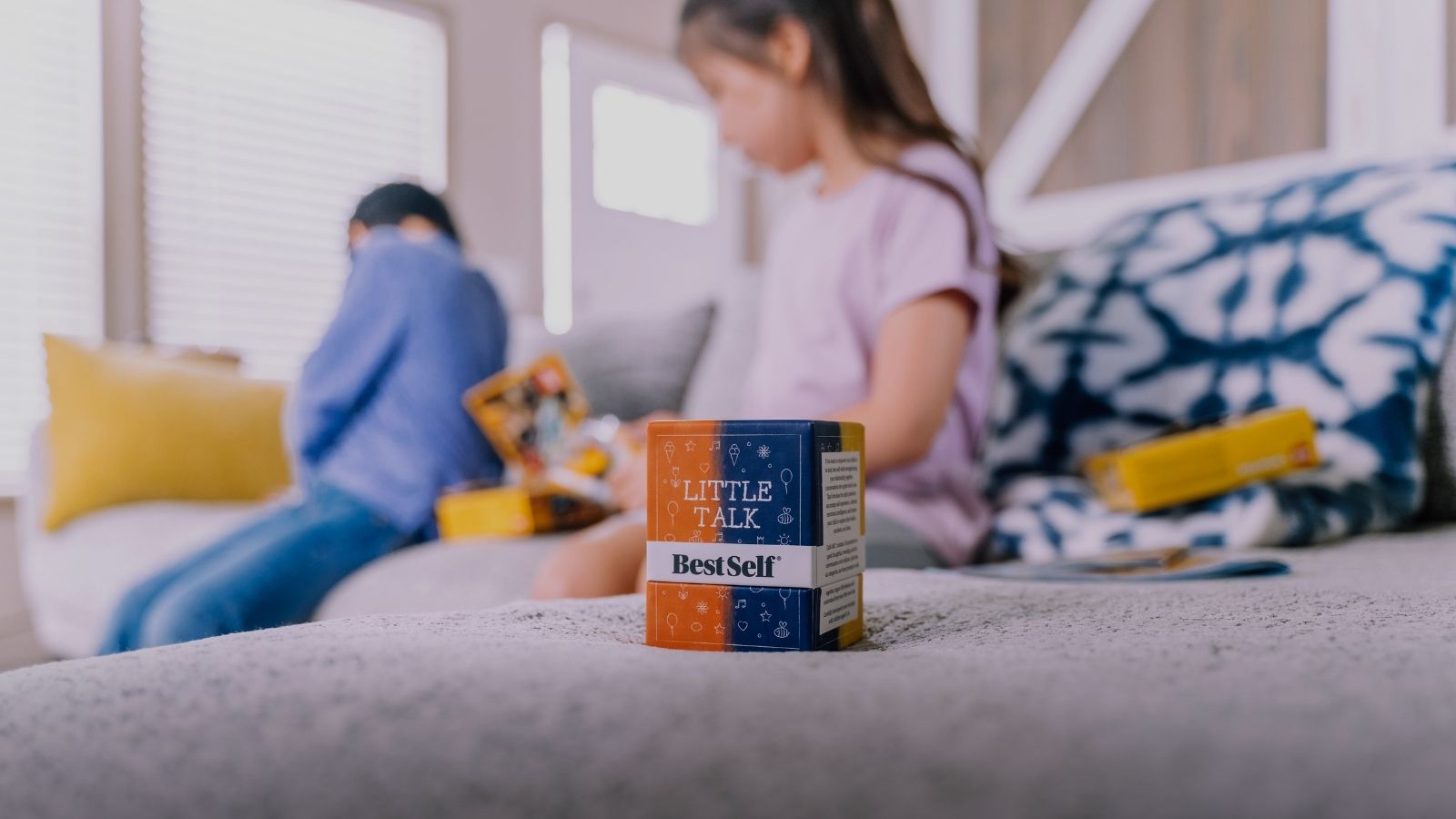
A deck built for exactly this

Best seller · Ages 5 to 14
170 conversation starters, screen-free, built with child psychologists across six categories: Emotional Intelligence, Hopes & Dreams, Likes & Dislikes, Random, Reflection, and Self-Expression.
It works on the same principle as the five questions above. Instead of one big vague prompt, a kid gets something specific enough to actually answer, and specific enough that the answer says something real.
There's a particular feeling that shows up right about now, whether it's kindergarten or senior year: pencil cases fresh out of the pack, backpacks that still have that plastic smell, the whole house quietly resetting around somebody else's new schedule. If your own setup could use that same reset, this is where we'd start.
Worth keeping somewhere easy to grab for the next few weeks, while all of this is still getting sorted out.
Get Your Kid Talking →This week only
20% off $50+
From August 10 to 16, use code FRESHSTART20 at checkout for 20% off orders over $50.
Get everyone's system sorted before the first bell →