A lot of people are willing to work hard for a big goal, but they make one quiet mistake along the way: they refuse to count anything as a win until the finish line is in sight.
That sounds disciplined. In practice, it usually drains motivation.
If you only celebrate the promotion, the launch, the major milestone, or the finished project, you can go weeks or months without giving yourself any real sense of progress. That makes it much harder to stay engaged.
Small wins help close that gap.
What counts as a small win?
A small win is any visible sign of progress that matters in context.
That can include:
- finishing a task you were avoiding
- making progress on a larger project
- having a difficult conversation
- showing up for a habit you are trying to build
- doing something well even when motivation is low
The point is not to lower your standards forever. It is to stop overlooking the progress that keeps you moving.
Why small wins matter
Progress is one of the strongest drivers of motivation
Research by Teresa Amabile and Steven Kramer on workplace motivation found that a sense of progress is one of the most powerful factors in keeping people engaged in meaningful work.
That matters because most goals are not completed in one satisfying burst. They are built through repeated, smaller steps.
Celebration reinforces behavior
Behavior researcher BJ Fogg has written about how even a brief moment of celebration can help reinforce a behavior and make it more likely to happen again.
That celebration does not have to be dramatic. It can be as simple as pausing, acknowledging the progress, and letting yourself register that it happened.
Small wins create momentum
Progress tends to make the next step feel more possible.
When people say they are “in a groove,” they are often responding to accumulated evidence that they are moving forward. Small wins help create that evidence.
Why people skip celebration
Even when progress is happening, a lot of people have a habit of dismissing it.
Common reasons:
- moving the goalpost — once something is done, it instantly becomes the new baseline
- perfectionism — if it was not perfect, it does not count
- comparison — someone else has done more, so your progress feels too small
- fear of complacency — you worry that acknowledging progress will make you lose your edge
- “I should be doing this anyway” thinking — you treat effort as invisible because it feels expected
These habits make motivation harder than it needs to be.
10 ways to celebrate small wins
1. Write them down
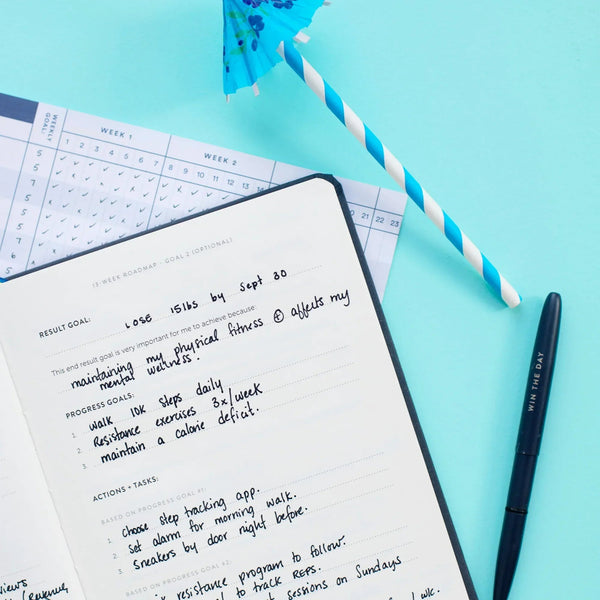
A quick note in a journal, notes app, or running document creates a record of progress.
If you already use something like the [Self Journal](https://bestself.co/products/self-journal), this can be an easy place to capture daily wins.
2. Tell someone
Sharing a win with a friend, partner, teammate, or manager makes it more tangible.
3. Use a physical cue
A fist pump, deep exhale, smile, or simple “yes” can be enough to mark the moment.
4. Give yourself a small reward
A short walk, a coffee break, one song you love, or a few quiet minutes can help mark progress without turning it into a big production.
5. Track it visually
Checkmarks, calendar streaks, tallies, or sticky notes all make progress easier to see.
6. Pause long enough to feel it
A lot of people rush past completion so quickly they never actually register it.
7. Keep a wins list
A running list helps on low-motivation days when your brain insists nothing is working.
8. Connect the win to the bigger goal
Remind yourself how today’s progress fits into the larger picture.
9. Normalize celebration at work
If you lead a team, create space for small wins to be noticed. Specific acknowledgment goes much further than generic praise.
10. Build review rituals
A short weekly review can catch wins that get lost in the pace of the day.
Celebrating wins at work
Small wins matter in professional settings because long projects can otherwise feel like a grind without visible payoff.
Helpful ways to build this into work:
- start meetings with quick progress updates
- acknowledge effort as well as outcomes
- make praise specific
- celebrate milestones before the final delivery
- create a shared place for team wins when it fits the culture
People stay engaged longer when progress is visible.
Celebrating wins in personal life
Personal wins are easier to overlook because they are often private.
You might not get external recognition for:
- being more patient than usual
- keeping a promise to yourself
- taking care of your health
- making steady progress on a long-term goal
- getting through a hard week with more intention than before
That is exactly why it helps to notice them yourself.
What happens when you only celebrate big wins?
If the only wins that count are major ones, several things tend to happen:
- motivation drops between milestones
- everyday progress starts feeling invisible
- perfectionism gets stronger
- burnout becomes more likely
- nothing ever feels like enough for very long
That is not a motivation strategy. It is a motivation leak.
How to make celebration a habit
The easiest way is to make it small and repeatable.
Try one of these:
- name one win before ending the workday
- write down three wins before bed
- review your week every Friday or Sunday
- send a quick message to someone when something goes well
The bar should be low enough that you actually do it.
Frequently Asked Questions
Won’t celebrating small wins make me complacent?
Usually the opposite. Acknowledged progress tends to increase motivation, not reduce it.
What if the win feels too small?
That is often a sign it is exactly the kind of progress you normally ignore.
How do I celebrate without bragging?
You do not need public attention. Private acknowledgment works too.
What if I cannot think of any wins?
Lower the bar. Finishing something, showing up, or handling something better than usual still counts.
Start with one thing today
Before the day ends, name one thing that went better than it would have a month ago.
Not the biggest thing. Not the most impressive thing. Just one real sign of progress.
That is how momentum starts feeling visible again.