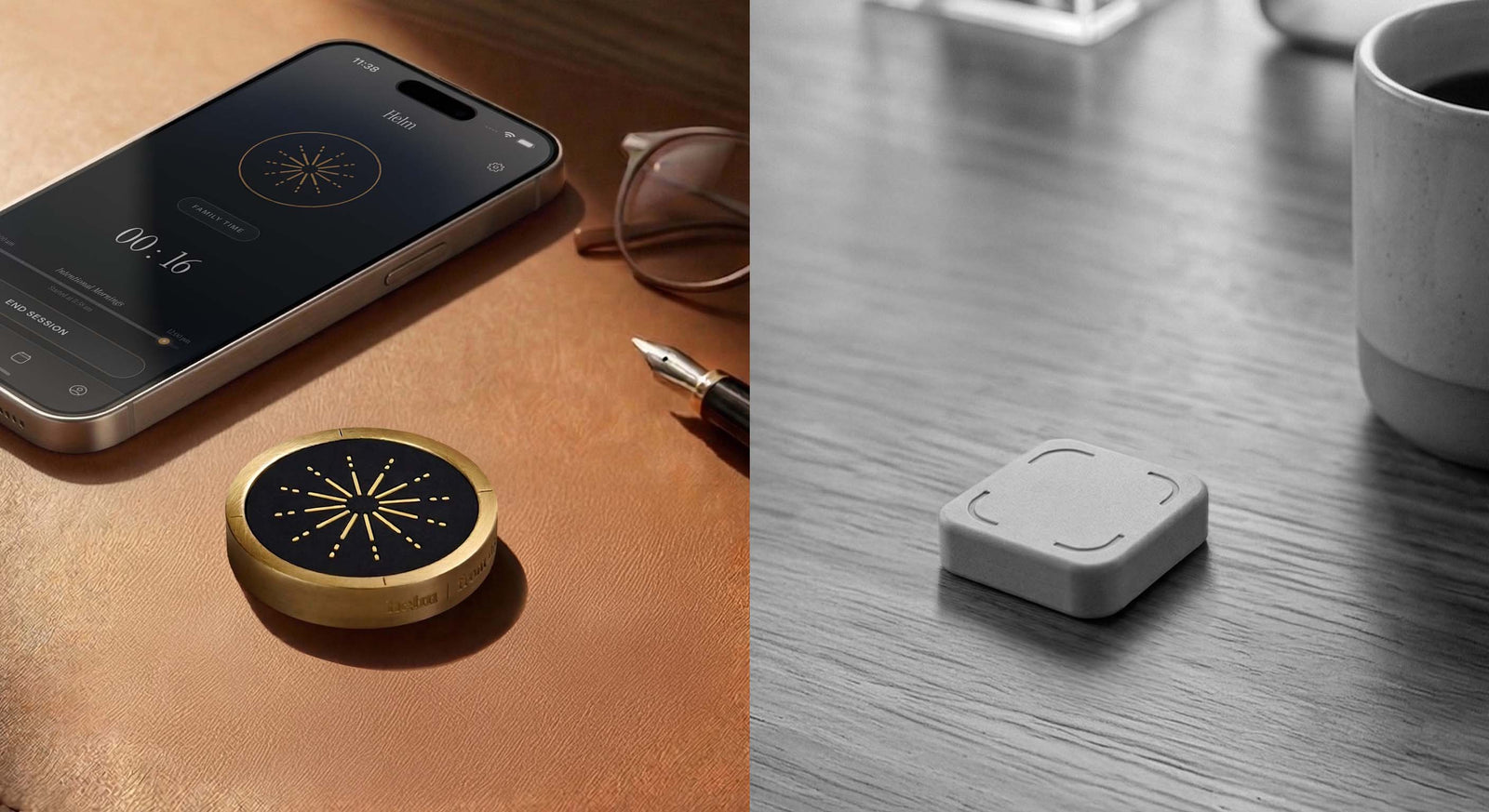
If app blockers have not worked for you, physical phone blockers are the next logical step.
That is where Helm and Brick come in.
Both are designed to make your phone harder to access during focus time. Both create more friction than software-only blockers. But they solve the problem in different ways, and the better choice depends on what kind of accountability you actually need.
This guide compares Helm and Brick on price, platform support, features, accountability, and overall fit.
Quick answer
Choose Brick if you want a simpler, lower-cost entry point.
Choose Helm if you want more structure, stronger accountability, and a more full-featured long-term system.
The biggest difference
The biggest difference is not just price or materials.
It is the type of accountability each product offers.
Brick adds physical friction through its NFC-based setup.
Helm adds physical friction too, but it also introduces systems like Guardian Mode, scheduled sessions, health-based unlocks, and family sharing.
That makes it a stronger fit for people who know simple friction is not enough.
Helm vs Brick at a glance
Brick
Best for: users who want a simpler, lower-cost physical blocker
Strengths:
- lower price point
- straightforward setup
- good starter option for testing physical phone blocking
Tradeoffs:
- fewer advanced features
- lighter accountability system
Helm
Best for: users who want stronger structure and more advanced features
Strengths:
- works on iOS and Android
- Guardian Mode for outside accountability
- scheduled sessions and health-based unlocks
- family sharing support
Tradeoffs:
- higher price
- more feature depth than some users need
Platform support
Brick: iOS and Android
Helm: iOS and Android
Both products now work across platforms, so compatibility is no longer the deciding factor.
The real difference is in how each system is designed.
Helm offers a more fully developed experience across both platforms, with consistent features and deeper functionality.
Brick focuses more on a lightweight, basic implementation.
Price
Brick: around $59
Helm: $129
If budget is the main factor, Brick is easier to justify as a first experiment.
If you already know you need more than basic app blocking or simple friction, Helm’s higher price is easier to justify because the feature set is significantly broader.
Accountability and self-control
This is where the comparison gets more interesting.
Brick’s model
Brick increases friction. It works best for people who benefit from an extra physical step and do not need complex structure.
Helm’s model
Helm is built for people who need stronger external constraints.
Guardian Mode is the most important differentiator here. If someone else holds the unlock code, you cannot simply negotiate with yourself in the moment.
If you know your challenge is not awareness but follow-through, Helm has a clear advantage.
Features
Where Helm stands out
- Guardian Mode
- health-based unlocks
- scheduled sessions
- preset breaks
- grayscale mode
- content restrictions
- family sharing
- broader analytics
Where Brick may still win
- simpler experience
- lower price
- easier entry point
This is essentially a simplicity-versus-depth decision.
Build and design
Brick is the more budget-oriented product.
Helm is positioned more like a premium device, with stronger emphasis on materials, durability, and long-term use.
This matters more if you want something you will keep using consistently, not just test.
Who should buy Brick?
Brick is the better fit if:
- you want to spend less upfront
- you prefer a simpler tool
- you are testing whether a physical blocker works for you
- you do not need advanced accountability features
Who should buy Helm?
Helm is the better fit if:
- you want outside accountability through Guardian Mode
- you want scheduled blocking instead of relying on willpower
- you like the idea of health-based unlocks or habit stacking
- you want family sharing
- you are looking for a more complete long-term system
What about ADHD or habit-driven phone use?
This is one of the areas where Helm has the clearer edge.
Features like Guardian Mode, preset breaks, and health-based unlocks are more useful for people who need external structure, not just another reminder.
That does not mean Brick cannot help. It just means Helm is better designed for more demanding use cases.
Is Brick still worth buying?
Yes, for the right user.
If you want something simpler, more affordable, and mainly need a physical cue to interrupt automatic phone use, Brick is still a solid option.
It is not obsolete — just more limited in scope.
Is Helm worth the extra money?
Usually yes, if you will actually use the extra features.
If stronger accountability, structured sessions, or long-term behavior change matter to you, the difference is meaningful.
If you just want the simplest possible physical blocker, the price gap matters more.
Final verdict
If you want a lower-cost, simpler physical phone blocker, Brick is a solid entry point.
If you want stronger accountability, more flexibility, and a more complete system, Helm is the better choice.
In other words:
Brick is the simpler starter option.
Helm is the stronger long-term solution.
That makes Helm the better choice for more serious users — but not automatically the right choice for everyone.
If you want to explore Helm in more detail, you can learn more here.
Frequently Asked Questions
Does Helm work on Android?
Yes. Both Helm and Brick support iOS and Android.
What makes Helm different from Brick?
The biggest differences are Guardian Mode, broader feature depth, and stronger accountability systems.
Is Brick cheaper?
Yes. Brick is the lower-cost option.
Is Helm only for people with ADHD?
No. But some of its features are especially helpful for people who benefit from more external structure.
Which one should I buy first?
If you want a simple, low-cost starting point, Brick is a good first test. If you already know you need more than basic friction, Helm is the better first choice.