







How do you create a relationship that lasts a lifetime — one where you keep growing together rather than apart? The answer isn't luck. It's intentional relationship goal setting.
We've all admired those couples who seem more deeply in love than ever. But what most people don't see is the deliberate work behind those partnership photos: the honest conversations, the shared plans, and the ongoing commitment to setting goals for a relationship that actually matter to both people.
In this guide, we'll break down what relationship goals mean, why they strengthen your connection, and exactly how to set relationship goals that you'll both follow through on.
What Are Relationship Goals?
Relationship goals meaning can vary widely depending on who you ask — but at their core, relationship goals are shared intentions that couples set to grow closer, navigate life together, and build something meaningful over time.
Unlike individual goals (which focus on personal achievement), relationship goals are co-created. They belong to both partners equally. They can be as simple as "have a weekly date night" or as ambitious as "buy our first home together in three years."
The key distinction: relationship goals for couples aren't wish lists. They're commitments with a plan behind them.
Types of Relationship Goals
When thinking about couple relationship goals, it helps to organize them into categories:
- Connection goals — deepening emotional intimacy, communication, and understanding
- Lifestyle goals — travel, where to live, how to spend weekends
- Financial goals — saving, investing, big purchases, financial transparency
- Growth goals — supporting each other's careers, education, and personal development
- Family goals — children, extended family dynamics, parenting values
- Health & wellness goals — fitness, mental health, diet, sleep habits
- Intimacy goals — physical closeness, quality time, and shared rituals
Having goals across multiple categories ensures you're building a complete life together — not just optimizing one dimension while ignoring others.
Why Relationship Goal Setting Matters
Dr. John Gottman of the Gottman Institute has spent decades studying what makes relationships thrive. His research consistently shows that couples who create a sense of shared meaning experience higher levels of emotional intimacy, resilience through conflict, and long-term satisfaction.
Relationship goal setting is the practical mechanism for building that shared meaning. When you sit down together and articulate what you both want — and make a plan to get there — you create alignment. Alignment reduces the hidden resentments that come from unspoken expectations.
In short: couples who set goals together stay together more intentionally.
How to Set Relationship Goals That Actually Work
1. Start with an Honest Conversation
The foundation of learning how to set relationship goals is communication. You can't set shared goals without first knowing what you each actually want.
That sounds obvious — but it's easy to assume you're already aligned. You're partners, after all. The problem is that what was important to you or your partner two years ago may have shifted. Priorities evolve. Life changes.
Carve out dedicated time — not during a stressful week, not squeezed between other tasks — to discuss what you both want in the categories above. Write down your individual thoughts first, then share and compare.
The Intimacy Deck is designed for exactly this kind of conversation — structured prompts that open up discussions couples rarely have on their own.
2. Define What "Goals for a Relationship" Look Like for You Specifically
One of the most common mistakes couples make is borrowing someone else's relationship couple goals. Social media is full of aspirational couple content — the European vacations, the matching outfits, the picture-perfect proposals.
But meaningful goals need to come from inside your relationship, not outside it.
Ask yourselves: What would make us feel more connected six months from now? What does our ideal relationship look like in five years? What's one thing we've been putting off that we should tackle together?
The answers to those questions are your goals — not someone else's highlight reel.
3. Make Goals Specific and Time-Bound
Vague intentions don't become habits. "We should travel more" isn't a goal — it's a wish. "We'll take one international trip before December, and we'll each research one destination by next Sunday" is a goal.
For each relationship goal for couples, ask:
- What does success look like specifically?
- By when?
- What's the first actionable step?
- Who's responsible for what?
This specificity is especially important for bigger goals (buying a home, having children, changing careers) where the stakes are high and misalignment is costly.
4. Mix Short-Term and Long-Term Goals
The best relationship goals for couples exist on multiple timelines. Short-term goals (weekly date nights, a weekend trip next month) create momentum and build the habit of intentional time together. Long-term goals (the 10-year plan, the dream home, retirement vision) give your relationship direction and a shared north star.
Think of it like a staircase: small weekly and monthly goals are the steps, and the long-term vision is where the staircase leads.
Start with small wins. They build confidence and make the bigger goals feel more attainable.
5. Review and Adjust Regularly
Goals that get set once and never revisited quietly die. Life changes — jobs change, circumstances change, people change. Regularly reviewing your goals as a couple keeps them alive and ensures you catch misalignment early rather than letting it fester.
A simple ritual: once a month, spend 20 minutes reviewing your shared goals together. What's on track? What needs to adjust? What's come up since last time?
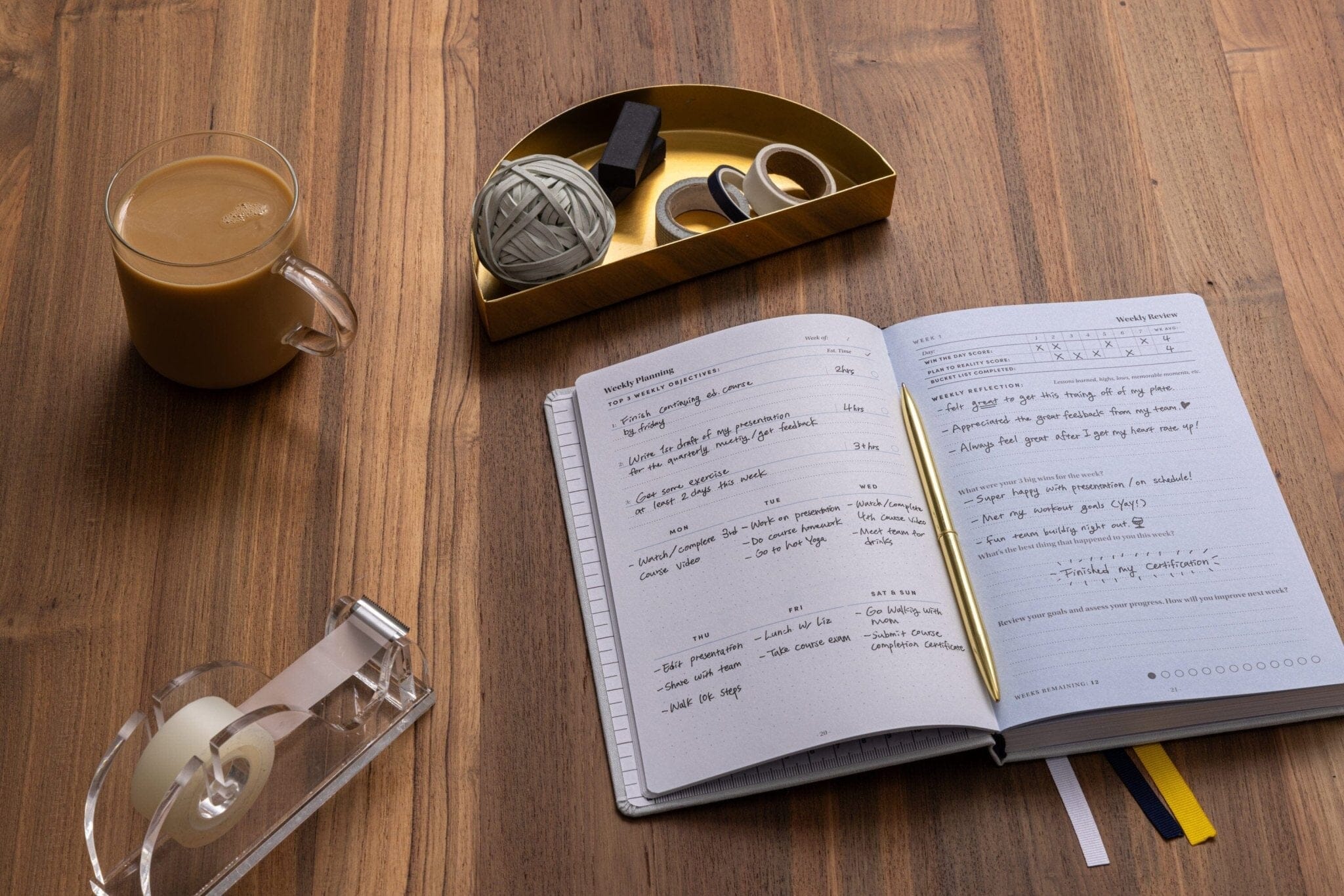
The Self Journal includes a weekly review process that can be adapted for couple check-ins. Many couples use it as a shared planning tool for exactly this purpose.
6. Celebrate Progress, Not Just Completion
Most goal-setting advice focuses on the finish line. But in relationships, the journey matters as much as the destination. Acknowledge the small steps. Celebrate milestones. Recognize each other's effort.
When you're working toward goals together, there's twice the energy going into them. Notice that. Appreciate it.
Practical Relationship Goals Examples for Couples
If you're not sure where to start, here are concrete examples across different categories — use them as inspiration for building your own list of relationship couple goals:
Connection & Communication Goals
- Have a 20-minute phone-free dinner together 4 nights per week
- Use conversation cards (like the Intimacy Deck) once a week for the next 3 months
- Practice active listening by summarizing what the other person said before responding in disagreements
Lifestyle & Adventure Goals
- Visit two new cities together this year
- Try one new activity every month (cooking class, hiking trail, museum)
- Re-create your first date on your anniversary
Financial Goals
- Have a monthly money date to review spending and savings progress
- Save a specific amount toward a shared purchase by a set date
- Discuss financial values and individual "fun money" budgets openly
Growth & Support Goals
- Each partner shares one professional goal per quarter and gets active support from the other
- Read one book together and discuss it
- Attend a couples workshop or retreat
What to Do When Your Goals Don't Align
Misalignment is normal. You're two different people with different backgrounds, personalities, and life experiences. What matters is how you handle it.
When your goals for a relationship don't match up, try this approach:
- Name the gap without blame. "I notice we want different things here" is better than "you never care about what I want."
- Explore the underlying need. Often a specific goal (e.g., moving to a new city) is really about an underlying need (adventure, fresh start, career growth). Understanding the need opens up more solutions.
- Look for the overlap. Even opposing goals usually have some shared values underneath. Find those and build from there.
- Agree on a timeline to revisit. If you can't reach alignment now, set a date to discuss again — and in the meantime, agree not to unilaterally act on the conflicting goal.
Make It Yours
The best list of relationship goals is the one built by the two of you — not curated from social media or borrowed from a magazine. Your goals should reflect your shared values, your specific life, and the relationship you're actively building together.
Start small if that feels right. One goal this week. One conversation tonight.
The couples who do this consistently aren't lucky — they're deliberate. And that deliberateness is what makes the difference.
Ready to go deeper? The Intimacy Deck and Date Night Deck are designed to spark exactly the kind of conversations that lead to better goals and stronger connection.
Sources:
Gottman Institute: Enriching Marriage by Creating Shared Meaning
Gottman Institute: Shared Meaning Is Key to a Successful Relationship


