
The Paper Brain System
I counted them last night. Forty-seven productivity apps on my phone. Downloaded with hope. Abandoned within days.
Notion (too complex). Todoist (forgot it existed). Things 3 (ironically, forgot things). Even the ones "designed for ADHD brains" lasted maybe a week before joining the graveyard.
Each time I thought: "THIS will finally fix my brain." Each time I was wrong.
Then two weeks ago, at 6:23 AM, with a screaming baby and a toddler asking why bananas are yellow, I had a revelation that should have been obvious: my brain doesn't believe things exist unless I can physically see them.
The ADHD Object Permanence Problem
Here's what nobody tells you about ADHD: we have object permanence issues. Not like babies who think you disappear during peek-a-boo. But if I can't see something, my brain genuinely forgets it exists.
That task in the app? Might as well be on Mars. That digital calendar reminder? My brain treats it like spam. That carefully organized Notion database? It's in the same mental category as my high school MySpace page. Gone.
Researchers at UCLA found that writing by hand activates parts of the brain that typing doesn't touch. The physical act of writing makes things real in a way pixels never can. For ADHD brains, this difference isn't just helpful. It's everything.
The $3 Revolution
My entire system now costs less than a coffee:
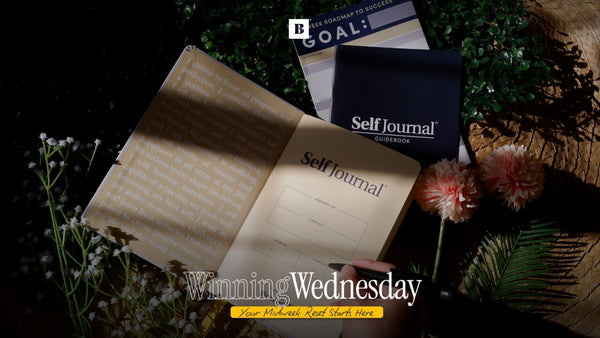
- One notebook on my kitchen counter
- Sticky notes in three colors
- A pen that actually works
That's the whole system that replaced 47 apps.
Every night at 9 PM, I open to a fresh page and write tomorrow's three things:
- What must happen (max 3)
- What would be nice (max 3)
- What I'm worried about forgetting (dump it all)
In the morning, that page is open on my counter. Can't minimize it. Can't swipe it away. Can't pretend it doesn't exist.
The Sticky Note Command Center
On my fridge, three colors:
- Red: TODAY (moves to yellow tomorrow if not done)
- Yellow: THIS WEEK (moves to red when urgent)
- Green: SOMEDAY (no guilt, just captured)
Is it Instagram-worthy? No. Does my kitchen look like an office supply store exploded? Sometimes. Do I actually remember things now? Yes.
My mother-in-law saw it and said, "Oh honey, have you tried using your phone for that?"
I laughed so hard I scared the baby.
Why Paper Works When Pixels Don't
1. You can't close paper An app can be minimized, closed, forgotten. Paper just exists. Right there on your counter.
2. Writing is remembering The physical act of writing engages motor memory. I can literally feel myself writing "Quinn doctor 2 PM" hours later.
3. Crossing out is satisfying That dopamine hit from checking a box in an app? Multiply it by ten when you physically strike through a task with a pen. It's primal.
4. No notifications to ignore Apps trained me to ignore them. My brain learned digital reminders are suggestions, not obligations. Paper doesn't beg. It just is.
The Daily Action Practice
Here's exactly what I do with a piece of paper (or our Daily Action Pad):
Night before: Write tomorrow's date. List your big three. Brain dump worries below. Put it where you'll literally trip over it.
Morning: Look at the list while coffee brews. Pick one thing to do before noon. Just one.
Throughout the day: Every time you walk by, you see what's left. No opening apps. No passwords. No "syncing across devices." Just words on paper, existing persistently in your physical space.
End of day: Cross out what's done. Move what's not to tomorrow. Feel zero guilt because you can see exactly what you actually accomplished versus what you thought you would.

The App Graveyard Funeral
This week, give your productivity apps a proper funeral.
Step 1: Count your abandoned productivity apps. All of them. Include the ones in folders you never open.
Step 2: Delete all but one. (Keep calendar if that's working for you.)
Step 3: Get one piece of paper. Write tomorrow's three must-dos.
Step 4: Put that paper somewhere you'll see it five times tomorrow.
Make it easier: Don't delete the apps yet. Just try paper for three days. If you hate it, the apps will still be there, waiting in the app store like digital zombies.

What's one system in your life that you've been maintaining out of habit rather than because it actually works for you?

📖 Book: The Extended Mind by Annie Murphy Paul This book explains why thinking doesn't just happen in our heads. The chapter on "thinking with things" validated everything about why I need physical tools.
✏️ Tool: The Pen Test Buy three different pens this week. Find the one that makes you want to write. The right pen changes everything. Mine is a black Lamy Fountain pen. It's perfect.